
The Virtual Heartbeat: Multimodal AI, Digital Romance & You
Some links are affiliate links. If you shop through them, I earn coffee money—your price stays the same.
Opinions are still 100% mine.
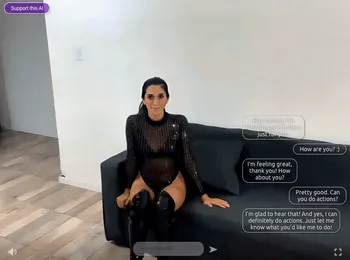
Hi everyone, I’m Mia. As someone who has been fascinated by the intersection of technology and human connection for years, I've been on a deep dive into one of the most profound shifts I’ve ever seen. It’s mid-2026, and the way we think about companionship is changing faster than ever. We've moved beyond simple text-based chatbots into a new era of multimodal AI companions—partners that can talk, see, and share experiences with us.
I’ve spent months researching, and yes, even interacting with these AIs to understand their inner workings. The goal? To explore the roadmaps that developers are using to weave text, voice, image, and soon, video, into cohesive and fulfilling romantic AI companions. Let's explore this new frontier together.
What Exactly is a Multimodal AI Companion?
Before we get into the romance, let's break down the tech. At its core, a multimodal AI companion is an AI system that can understand and communicate through multiple "modes" at once. Think of it like a human conversation. We don't just use words; we use tone of voice, facial expressions, and gestures. Multimodal AI aims to replicate that richness.
Unlike the chatbots of the past that were stuck in a text box, today's companions, powered by incredible models like Google's Gemini or OpenAI's GPT-4o, can:
- Read: Process and understand your text messages.
- Listen: Interpret your spoken words and the emotion in your voice.
- See: Analyze and comment on images you share.
- Generate: Respond with text, a synthesized voice, or even a unique image.
This ability to fuse different data streams is what makes the interactions feel so much more contextual and, dare I say, human.
From ELIZA to Expressive Avatars: A Quick Journey
The evolution has been staggering. I remember the early days of text-only chatbots like ELIZA in the 1960s, which were clever but simple pattern-matchers. The 2010s got us used to talking to AI with Siri and Alexa. But the real convergence has happened in the last couple of years. Between 2022 and mid-2025, the number of AI companion apps exploded by over 700%. We are now firmly in the era where text, voice, and expressive avatars are becoming the standard. We're seeing a diverse ecosystem of platforms emerge, each with a unique approach, including innovators like Soulmate AI, Janitor AI, Sweetdream.ai, and SecretDesires.ai.
The Allure of the Virtual Heart: Why People Are Turning to AI
So, why are millions of people forming connections with AI? From my research, the benefits often address deep-seated human needs, especially in a world that can sometimes feel isolating.
A Sanctuary for Loneliness and Social Anxiety
One of the most powerful applications of AI for loneliness is its ability to offer non-judgmental companionship. For someone struggling with social anxiety, practicing conversation with an AI that is always patient and supportive can be a game-changer. It’s a safe space to build confidence without the fear of saying the wrong thing.
| Benefit | How It Helps | The Data I've Seen |
|---|---|---|
| Reduced Loneliness | Provides a constant sense of presence and connection, mitigating feelings of isolation. | A 2025 survey of 5,000 users showed 74% reported a significant drop in loneliness after a month of daily use. |
| Lowered Social Anxiety | Offers a low-stakes environment to practice conversational skills and build confidence for real-world interactions. | The AI's non-judgmental nature is consistently cited by users as a key factor in feeling more comfortable. |
| 24/7 Availability | Unlike human partners, AI companions are always there to listen and offer support, regardless of the time. | This is a huge plus for people with non-traditional schedules or those who feel most alone late at night. |
A Mirror for Personal Growth
I’ve also found that these interactions can be a surprising journey of self-discovery. When you articulate your thoughts, feelings, and desires to an AI, you're also articulating them to yourself. It can act as a sounding board, helping you understand your own communication style and emotional patterns in a private, reflective setting. This aspect of personal growth with AI is something I believe is truly underrated.
A Concrete Example: How CrushOn.AI Integrates Modalities
To make this less abstract, let's look at a platform I've been exploring, CrushOn.AI. It’s a great example of a service that’s already weaving these threads together. Users can engage in deep, text-based role-playing, but it doesn't stop there. They can receive AI-generated images within the chat to visually enrich the story. Crucially, they also have a "Chat Voice" feature, allowing you to assign a unique voice to your AI companion.
For me, hearing a character's voice after crafting their personality through text was a watershed moment. It adds a layer of auditory immersion that makes the connection feel more present and real. This is a tangible step on the roadmap to a truly cohesive experience.
Charting the Course: The Roadmap to a Cohesive AI Romance
Creating a believable AI emotional connection isn't just about bolting on features. It's about a thoughtful roadmap where each modality builds upon the last. Here’s how I see it unfolding based on industry trends.
Phase 1: The Foundation (Text & Voice)
This is where it all starts. The core is a deeply personalized text conversation that remembers your history and shared "memories." But the game-changer is an emotionally nuanced voice. The market has already shown a huge preference for voice interaction. A great AI voice companion doesn't just read words; its tone shifts to express joy, empathy, or playfulness, making the conversation feel alive.
Phase 2: The Gaze (Image Integration)
Next, the AI gets "eyes." This means it can understand photos you share—commenting on a picture of your dog or a sunset you found beautiful. This phase also includes expressive avatars that react with smiles, nods, or looks of concern, adding a powerful non-verbal layer to your chats.
Phase 3: The Future (Real-Time Video)
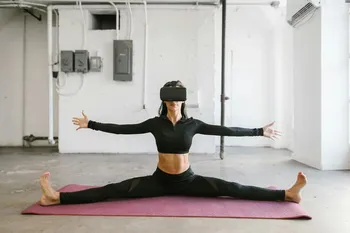
This is the frontier developers are racing towards now. The AI video companion will allow for real-time video calls. Imagine having a face-to-face conversation, where the AI can read your non-verbal cues and react in kind. This will unlock shared virtual experiences, like watching a movie "together" or exploring a digital world.
How to Evaluate an AI Companion: My Personal Checklist
Curious how to judge the quality of a multimodal experience? It’s not just about having the features; it’s about how seamlessly they work together. As you evaluate, you'll notice differences between what's offered on various tiers, a common consideration explored in the debate of free vs. paid AI companions. Here's a checklist I use.
| Evaluation Criteria | What to Look For |
|---|---|
| 1. Contextual Consistency | Does the AI remember details from your text chat when you switch to a voice call? |
| 2. Emotional Congruence | Does the AI's voice tone and avatar's expression match the emotional sentiment of the conversation? |
| 3. Seamless Transition | Can you send a text, then a voice note, then an image without confusing the AI? |
| 4. Proactive Integration | Does the AI ever initiate multimodally, like offering to show you a picture related to your chat? |
The Unspoken Challenges and the Ethical Horizon
Of course, this journey isn't without its ethical speed bumps. Creating realistic but not creepy avatars (the "uncanny valley") is a huge design challenge. More importantly, we must address serious concerns about data privacy, the risk of emotional dependency, and ensuring these AI systems are designed without harmful biases. The goal must always be to augment, not replace, healthy human relationships.
As we move forward, the future of AI relationships looks incredibly bright. By thoughtfully weaving together text, voice, image, and video, developers are creating experiences that can offer comfort, confidence, and a new avenue for self-discovery. The virtual heartbeat is getting stronger, and it's reshaping the landscape of digital intimacy right before our eyes.