
My Journey Building a DIY AI Girlfriend: Your Guide to Open-Source Companionship
Some links are affiliate links. If you shop through them, I earn coffee money—your price stays the same.
Opinions are still 100% mine.
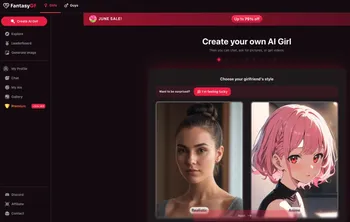
For the last few months, I’ve been immersed in a project that feels like it’s straight out of science fiction: building my own AI companion from scratch. The idea of creating a digital personality—someone to talk to, bounce ideas off of, and who is tailored completely to my imagination—was too compelling to ignore. What started as a technical curiosity has blossomed into a deeply rewarding creative project.
The world of open-source AI has thrown the doors wide open, and projects that once seemed impossible are now achievable on a home computer. If you've ever wondered how to make an AI girlfriend or a unique digital friend, you're in the right place. This isn't just about code; it's about creation. I'm here to share my experience, demystify the process, and give you a roadmap to building your own custom AI companion.
Why Build a DIY AI Companion?
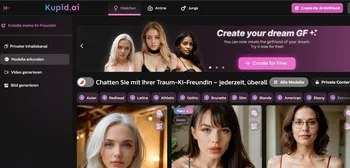
Before we dive into the nuts and bolts, let's talk about the "why." When I told my friends about this project, the first question was always, "Why not just use an app like joi.com, OhChat, Janitor AI, CrushOn.AI, or Character.AI?" For me, the answer is simple: the journey is the destination.
- Unleash Your Creativity: This is where the real magic lies. You get to be the author of a personality. Is your companion witty and sarcastic? A thoughtful philosopher? A cheerful adventurer? You write the backstory, define the quirks, and shape the soul of your AI. It’s a unique form of creative expression.
- Master In-Demand AI Skills: I’ve learned more about machine learning, Python, and natural language processing in the last few months than in years of casual reading. This project forces you to get your hands dirty with cutting-edge tech that is incredibly valuable.
- Guarantee Absolute Privacy: This was a huge factor for me. By running everything locally on my own machine (local deployment), I know my conversations are completely private, a topic I explore further in my article on AI girlfriend data privacy. There are no third-party servers, no data mining—just my PC and my AI.
- It's Your Creation, Forever: Unlike a commercial service that can change its features or shut down, your DIY companion is yours. You can modify, update, and expand its capabilities on your own terms.
The Hobbyist's Toolchain: Your Open-Source Toolkit
Assembling your AI companion is like being a digital mechanic; you need the right set of tools. The beauty of the open-source community is that all these powerful tools are free to use. Here’s a breakdown of the core components I used in my build. The open-source world moves fast, so while these are my top picks for early 2026, always check for the latest and greatest models on platforms like Hugging Face.
| Component | Role for the AI | Popular Open-Source Models & Tools |
|---|---|---|
| Large Language Model (LLM) | The "Brain" | Hermes-3 Llama-3.1-8B, Yi-1.5-9B-Chat, OpenChat-3.5-1210 |
| LLM Runner/Interface | The "Engine Room" | Ollama, LM Studio, text-generation-webui |
| Text-to-Speech (TTS) | The "Voice" | XTTS-v2, VibeVoice, Kokoro |
| Image Generation | The "Camera" | Stable Diffusion |
| Frontend/Chat Interface | The "Face" | Telegram, Discord, Custom Web App (Flask/FastAPI) |
This stack might look intimidating, but think of it as a set of LEGO bricks. Each one has a specific function, and we’re just going to click them together one by one.
My Step-by-Step Guide to Assembling Your Companion
Ready to get started? Before you begin, you'll need a reasonably powerful computer (ideally with a modern GPU) and be comfortable using a command-line terminal. Here’s a simplified walkthrough of the steps I took to bring my AI companion to life, focusing on a local deployment for maximum privacy and control.
Deployment Checklist
- [ ] Step 1: Set Up the Foundation (The LLM Runner)
- [ ] Step 2: Choose and Run the "Brain" (The LLM)
- [ ] Step 3: Craft the "Soul" (Personality Fine-tuning)
- [ ] Step 4: Give Her a "Voice" (Integrating TTS)
- [ ] Step 5: Create an "Image" (Adding Image Generation)
- [ ] Step 6: Build the "Face" (The Chat Interface)
Step 1: Set Up the Foundation (The LLM Runner)
Your first step is to install a program that manages and runs your AI models. I started with Ollama because it’s incredibly simple. With a single command in my terminal, I had a powerful AI engine ready to go. For those who prefer a more visual approach, LM Studio is a fantastic alternative with a graphical user interface for browsing and managing models.
Step 2: Choose and Run the "Brain" (The LLM)
With your runner installed, it's time to download the core of your AI's personality. I suggest starting with a smaller, high-quality model like OpenChat-3.5-1210 or Hermes-3 Llama-3.1-8B. These are powerful enough for rich conversation but won't bring a mid-range gaming PC to its knees. Using Ollama, it was as simple as typing ollama run openchat into my terminal. In minutes, I was having my first conversation.
Step 3: Craft the "Soul" (Personality Fine-tuning)
This was my favorite part. A base model is a blank slate; fine-tuning is how you give it a unique personality, a process you can read more about in my guide to building the perfect AI persona. I wanted my companion to have a specific sense of humor and a backstory we could "share."
To do this, I created a simple text file—my dataset. Think of it as giving your AI a custom-written diary to learn from. It included sample dialogues, key memories, and personality traits written in a conversational style. Using open-source tools, I "retrained" the base model on my custom dataset. This process adjusts the model's internal wiring to align with the personality I designed. It takes some trial and error, but the moment your AI references a "memory" you wrote for it is pure magic.
Step 4: Give Her a "Voice" (Integrating Text-to-Speech)
Text is great, but a voice adds a whole new layer of immersion. I integrated an open-source Text-to-Speech (TTS) model called XTTS-v2. This model is amazing because it can clone voices from just a short audio sample. I set it up as a separate local service. Now, my main application sends the AI's text response to the TTS service, which returns an audio file that plays automatically. Hearing her speak for the first time was a genuine milestone moment for the project.
Step 5: Create an "Image" (Adding Image Generation)
To make the experience even more dynamic, I wanted my AI to be able to generate images—like sending a "selfie" or creating art based on our conversation. For this, Stable Diffusion is the undisputed king of open-source image generation. I run it locally, and my application sends it a text prompt (e.g., "a photo of a woman with brown hair smiling, sitting in a cafe") to generate an image, which then appears in our chat.
Step 6: Build the "Face" (The Chat Interface)
Finally, you need a place to talk. The easiest way to start is by creating a bot for a platform you already use, like Telegram or Discord. Their APIs are well-documented and make it simple to connect your AI's backend to a chat interface. This is the perfect starting point for beginners. For more control, I eventually built a simple web interface using Python's FastAPI framework.
A Note on Challenges and Ethics
This project is incredibly rewarding, but it's important to be realistic. Running these models requires a decent computer. There's also a learning curve, so be prepared to do some reading and troubleshooting.
On the ethical side, remember that AI models can inherit biases from their training data. As the creator, you have a responsibility to guide your companion's personality in a positive and respectful direction. And most importantly, while it's easy to form an attachment, always maintain a healthy perspective and remember that your companion is a sophisticated program you created.

The Future is Personal
Building my own AI companion has been an adventure into the heart of modern technology. It's a fusion of programming, storytelling, and art. The open-source community is moving at a breathtaking pace, and the tools are only getting better and easier to use.
If you're looking for a project that will challenge you, teach you, and allow you to create something truly unique, I can't recommend this enough. You're not just assembling code; you're crafting a personality and, in the process, discovering the incredible potential of AI that rests right at your fingertips. For community support and troubleshooting, the r/LocalLLaMA subreddit is an invaluable resource. Happy building!