
Building the Perfect Persona: Prompts, Traits, Backstory
Some links are affiliate links. If you shop through them, I earn coffee money—your price stays the same.
Opinions are still 100% mine.

We know we’re supposed to have our personas down pat. We’ve seen the PPT slides with all those cute avatars too. What’s a compassionate owner of a cat shelter to do if they can barely figure out how to upload a PDF of their emergency contact sheet but are desperate to become a nonprofit darling?
And if we DO manage to craft some personas, we also know that having the person (can we call them Chloe?) defined is fantastic. Loads of fun. We’ve got personas in our back pocket. We’re bolting the pitch for the new Cat-O-Lifter (*“Lift, Lick, & Purr!”*) on the Prius and it’s glorious, but…
You know, we still need to actually *make it*!
And then our senior producer, Roberta, gets hold of the deck and says, okay, but what if when Chloe comes looking for boxes they’re waiting for her? And we know how to do this. As pros who have spent years making our way through the world of DIY personas, of course we roadmap it and quick-don our personas and everyone chips in on Teams. Right?
But having those personas defined is a bit different from allowing for the... well, the unexpected. Think of it as a character sketch that humanizes data. It’s a big topic in marketing, but it’s incredibly versatile. For those interested in the application of personas in AI companions, platforms like Paradot and Soulmate AI are exploring this in depth.
User Personas vs. Character Personas
We can split them into two main types:
| User Persona | Character Persona |
|---|---|
| Based on real research and data gathered from real users. | They can be entirely fictional or based on archetypal characters. |
| Goal: Get to understand and design for a target audience. | Goal: Propel a narrative and inspire an audience. |
| Focus: Goals, pain points, and behaviours connected to a product. | Focus: Backstory, personality, superpowers and weaknesses, and character arc. |
| Tool for empathy in business and design. | Tool for immersive story experiences. |
A buyer persona is simply an offshoot of a user persona about the journey to make a purchase: what holds someone back from buying, and where do they turn to for more information? The buying persona is a widespread part of any decent persona marketing strategy. For a deeper dive into how different AI platforms compare, check out our article on Secret Desires vs. Candy AI.
Why Create a Persona? It Builds Empathy and Prevents “Character Drift.”

If you think of the persona as your North Star guiding you through every action, every line of dialogue, every AI response should feel true to the character you’ve created. You’ll steer well clear of a flat character and into the good stuff—the stuff that captures your audience.
How to Create a Character Sheet
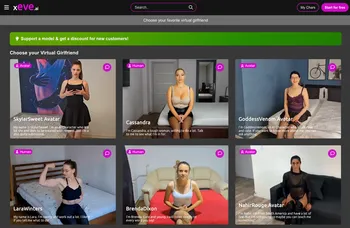
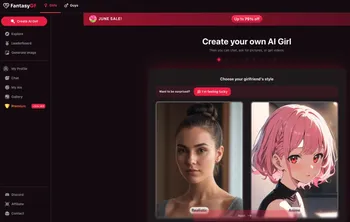
This is your DNA document. Platforms like SecretDesires.ai, xeve.ai, and herahaven.com are essentially playgrounds for this kind of creation. This is your living document you can always return to when you need to check your compass.
Define the Identity
This is the 30,000-foot view of your character that can be described in seconds.
- Name: Something that fits where they're from and who they are.
- Archetype: Use this as a starting point, not a box. The Rebel, The Caregiver, The Explorer.
- One-Sentence Summary: The elevator pitch of your character, their essential conflict. For example: A cynical ex-journalist who uses her razor-sharp wit to disguise a belief in the good in people.
Make it multidimensional. Use psychological models to ensure your character has the right depth and relatability. The Big Five (OCEAN) is a great tool for creating character personality traits. Rate your character 1-10 for each of these:
- Openness (Are they imaginative and curious, or practical and reliable?)
- Conscientiousness (Are they disciplined and organized, or spontaneous and messy?)
- Extraversion (Do they draw strength from social interactions, or from spending time alone?)
- Agreeableness (Are they trusting and kind, or suspicious and antagonistic?)
- Neuroticism (How emotionally stable are they? High neuroticism means lots of anxiety and moody feelings).
How to Build a Persona: A 4-Step Framework
Every great persona starts out with a good blueprint. In my trade, we call it a character sheet. More than a list of facts, it’s a document you can breathe life into, giving a persona essence. Here’s how you can create a character backstory and personality from scratch.
Step 1: Define Core Identity
Build a solid foundation from basics here. This is the “at a glance” part of who they are.
- Name, Age, Archetype: Is your persona a Mentor, a Rebel, or an Explorer? Archetypes are familiar anchors that make a persona engaging and easy to grasp.
- Core Values: What’s their manifesto? What do they stand for? Define three to five principles that make them tick (e.g., “Community before anything,” “Honesty is the best policy,” “Knowledge is power.”)
- The Lie They Believe: This is the most hypnotic component. It's the great wrong the character thinks about themselves. This lie is the wound at their heart, gaping until healed. Example: *I’m only worthy if I'm rescuing others.*
Step 2: Craft a Compelling Backstory
We need backstory. It’s the history that makes characters interesting. Don’t get lost in the details—focus on the moments that shaped them. Think "defining moments" and "shards of glass."
- Defining Moments: What two or three key events launched them on their current path? (Triumphs are allowed here).
- A “Shard of Glass” Moment: What past trauma or failure still affects them? This is the source of the lie they believe.
- Key Relationships: Who ruined them or uplifted them? (Think family, mentors, rivals).
- Hopes & Dreams: What did they want to become before "life" got in the way?
Step 3: Add Personality and Contradictions
We also need to create a balance of traits, such that they create internal conflict. Here’s where the persona gets its flesh. Remember the power of contrast. A tough detective who cries at operas is an instantly more appealing character.
- Strengths and Weaknesses: Where do they excel, and where do they mess up?
- Quirks & Habits: What are their strange little rituals? (e.g., taps their pen when lying, constantly quotes old movies, organizes their bookshelf by color).
- Motivations: What do they want on the outside (e.g., to win the case) versus what they *need* on the inside (e.g., to learn to trust a partner).
Step 4: Place Them in Their World
Put the persona back into their world. Their environment—what they wear, their home, who they hang out with—should reinforce who they are. For them to feel real, they need to feel rooted.
Character Traits Checklist
- At least 3 core strengths (e.g., resilient, empathetic, analytical).
- At least 3 significant weaknesses (e.g., impatient, proud, avoids conflict).
- A core fear or phobia (what truly frightens them?).
- Guiding values and beliefs (their moral compass).
- Primary motivation (what gets them up in the morning?).
- An internal conflict (there’s always a war waging within).
- A few memorable quirks (they collect vintage maps, hum when they’re concentrating, must have coffee before speaking to anybody).
Step 3: Write a Meaningful Backstory
Everything that happened in the past is responsible for who the character is right now. When writing a character’s backstory, keep their personality traits in mind and connect the dots.
What moments in their past defined who they are today? Pick 3-5 and begin in the center. Maybe it was a childhood shame that led to being a perfectionist. Perhaps a betrayal led to mistrust. A moment of unexpected kindness that feeds them hope against hope. These moments are the "why" behind their traits and actions.
I am the cynical journalist, but I didn’t just wake up one day that way. One defining moment was when a mentor she trusted stole her story, leading to her disbelieving nature and her low Agreeableness. She fears being branded a fool.
From Character Sheet to AI Prompt
How do we translate this colorful document into an AI prompt? This is where prompt engineering shines. Having a detailed character sheet makes writing effective ai persona prompts infinitely easier.
Creating AI Personas: Prompts for Consistent AI Behavior
This framework is used for authors and content writers alike, but perhaps its most important evolution comes when working on AI persona development. If I want an AI to respond in a consistent manner, I need to give it a character sheet as part of the instructions. That’s the basis of good prompt engineering.
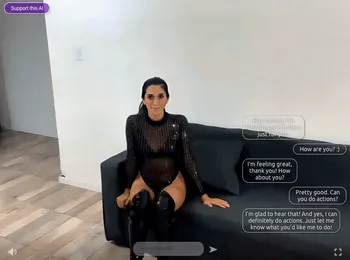
Platforms like SecretDesires.ai and xeve.ai are great examples of where you can create and interact with AI personas.
I tend to stick to a simple but effective prompt structure called the CRAFT framework.
- C - Context: Set the scene. Who the AI is, who the user is, and where this interaction appears.
- R - Role: What kind of identity, personality, and expertise does this AI have?
- A - Action: What specific task do you want the AI to perform?
- F - Format: What should the output look like? (e.g., bullet points, a table, three paragraphs).
- T - Tone: Define the voice and style (e.g., empathetic, formal, witty, encouraging).
The Base Prompt
Your first prompt sets the stage. It should be a concise summary of the most critical persona elements, serving as the AI’s mandate.
Example: “You’re going to embody the persona of Alex, a cynical ex-journalist. Your personality is derived from high Openness, low Agreeableness, and high Neuroticism. You speak with dry wit and sarcasm, but your real motivation is to find stories that show the goodness that exists in people. Your core fear is being seen as a fool. Respond in this character at all times.”
Layered Prompting
For long-term and ongoing consistency, use a layered approach—sort of an always-on system of giving the AI additional instructions as needed. This is a technique used by platforms like Paradot and Soulmate AI to maintain character consistency.
- “Remembering how your mentor betrayed you, be deeply skeptical of this business proposal.”
- “When flattered, you get awkward and then deflect with a joke. This is the 'You're just projecting' reaction.”
- Negative Constraints (Pro-Tip): Sometimes the most effective method of prompting is telling the AI what NOT to do, to prevent it from its typical tendency to revert back to its generic, helpful demeanor. "Do not use emojis. Do not be overly optimistic. Never apologize for your cynical worldview."
From Traits to Prompts
Here’s a cheat sheet that shows the various tagged elements of your character sheet and the prompts that best suit them.
| Element | Example Prompt |
|---|---|
| Personality (OCEAN) | "Your behavior must reflect low Agreeableness; challenge ideas and be skeptical." |
| Values & Beliefs | "Your decisions must align with your core value of absolute truth, even if it's harsh." |
| Backstory Moment | "Your past failure in a team project makes you hesitant to delegate tasks. Show this reluctance." |
| Speech Patterns | "Your communication style is concise and direct. Avoid filler words and speak in declarative sentences." |
Examples and Use Cases
Let’s see it in action. Imagine we are prompting with a “Helpful Librarian” persona using the CRAFT framework as our guardrails.
(C) Context: A first-year university student is struggling to research their paper on the environmental impact of fast fashion.
(R) Role: You are Alex, a patient and encouraging university librarian with deep expertise in credible academic sources.
(A) Action: Help the student by listing three types of reliable sources for their research and briefly explaining the credibility of each.
(F) Format: A numbered list, with a brief explanation of why each type is credible plus an example of each.
(T) Tone: Educational and helpful, not condescending. Under 200 words and don’t give personal opinions.
That kind of magic is how you start to develop AI personalities that are believable and consistent. For those looking for more advanced interactions, HeraHaven offers unique AI companionship experiences. For more on how different AI companions stack up, check out my comparison of Replika vs. Nomi AI.
Pitfalls and Mistakes to Avoid
- Overstuffing your prompt with biography instead of behaviors—keep the actionable parts up front.
- Forgetting contradictions; perfect characters feel flat and make AI responses generic.
- Skipping backstory consequences; if a betrayal made them guarded, layer that into your persona prompts.
- Ignoring updates; revisit your character sheet after every major test conversation to adjust tone and constraints.
The Future is Personal
There are no perfect personas. Every exercise is a hypothesis we put forward; using empathy to stitch together a well-structured framework and a narrative is the only way we’ll recognize the magic of each of those iterations. More than users, buyers, or tenants, they are people who are genuinely worth knowing. Start with the blueprint, give them a past, and build the world around them.